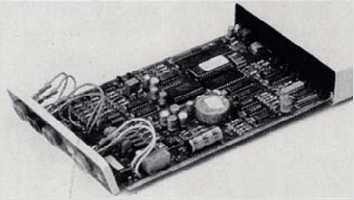
The RLINK / GLINK modem, used together with the RDLPWR-1TLC dataline power supply, forms the Level-3 network interface for the GE Lighting Total Lighting Control (TLC) system. This interface provides Ethernet connectivity to the TLC dataline network, allowing centralized programming, monitoring, and control of distributed lighting automation panels.
In a TLC system, the RLINK acts as a communication bridge between the operator workstation and the panel dataline. Multiple RLINK units may be deployed within a single system to support multiple access points, while maintaining coordinated system-wide operation.
Important note for long-term system planning: GE TLC is a legacy platform. Sites that require continued support, modern integration, or expanded functionality should consider upgrading to GE LightSweep. Retrofit options are available that allow existing TLC infrastructure to be transitioned to LightSweep without full panel replacement. More information is available through Chipkin’s LightSweep retrofit kits for legacy TLC panels .
Role of the RLINK / GLINK in the TLC Network
The TLC dataline communications system is designed to support multiple lighting automation panels connected over a shared dataline. The RLINK provides an Ethernet-based access point into this dataline, enabling an operator PC to communicate with all connected panels from a central location.
Through the RLINK, users can perform global system programming, monitor panel and relay status, and issue control commands across the distributed TLC installation. This centralized access simplifies system configuration and ongoing management, particularly in larger installations with multiple panels.
Multiple RLINK Configurations and Master Selection
A single TLC system can support multiple RLINK units, allowing more than one access point to the dataline. This can be useful in large facilities or where multiple operator workstations require access to the system.
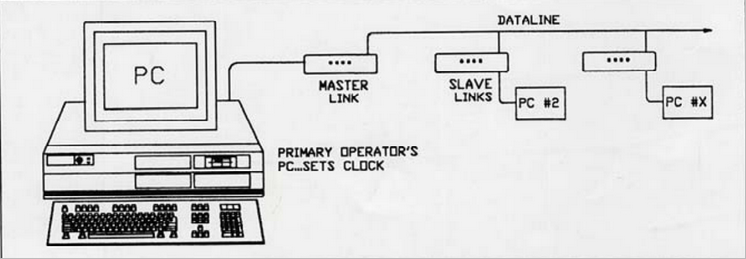
To prevent communication conflicts, only one RLINK in the system is permitted to act as the Master. The Master RLINK is responsible for broadcasting the system time of day to all connected panels. All additional RLINK units must be configured as slaves.
Slave configuration is accomplished using an internal switch setting on the RLINK hardware. In a system with multiple RLINKs, the second, third, and subsequent units must be explicitly set to slave mode to ensure proper system operation.
Operator PC Connection and System Clock Control
The Master RLINK is typically connected directly to the primary operator’s PC. This PC is used to configure the TLC system, perform global programming tasks, and set the system clock.
Because time-of-day scheduling is coordinated centrally, only the Master RLINK is permitted to broadcast clock updates. This design ensures consistent scheduling behavior across all panels and avoids timing conflicts that could occur if multiple devices attempted to control system time simultaneously.
Use in Legacy TLC Systems
The RLINK / GLINK modem and RDLPWR-1TLC power supply are components specific to the GE Lighting TLC architecture and are typically found in legacy relay-based lighting control installations. These components enable Ethernet access but rely on TLC-specific dataline protocols.
When maintaining or servicing existing TLC systems, understanding the role of the RLINK as a Level-3 interface is essential for troubleshooting communication issues, managing multiple access points, and planning system upgrades.
For facilities evaluating modernization or integration with contemporary building systems, migrating from TLC to LightSweep provides a forward-compatible path while preserving much of the existing relay and panel infrastructure.