BACnet - What are BACnet objects and object properties?
BACnet Integration Solutions
Chipkin has BACnet integration solutions for almost every situation. We specialize in network protocol communications and have over 20+ years of experience. Click for more information:
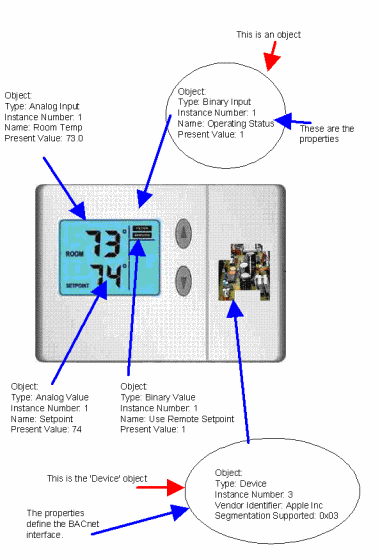
In BACnet, all device data is organized using a standardized object-oriented model. Each BACnet device exposes its internal data as a collection of objects, and each object contains a defined set of properties. This structure allows devices from different manufacturers to exchange information in a consistent and interoperable way.
Every BACnet device contains at least one object known as the Device Object. This object represents the device itself and includes properties such as the device instance number, vendor identifier, supported services, and operational status. All additional objects represent real control points, sensors, and system data.
Understanding how objects and properties work is fundamental when commissioning, troubleshooting, or integrating BACnet systems.
BACnet Objects in Practice
BACnet objects are logical representations of device functions. Common object types include Analog Input, Analog Output, Binary Input, and Binary Output. Each object type defines the behavior and supported properties for that function.
For example, a thermostat may expose an Analog Input object for measured temperature, an Analog Output object for setpoint control, and a Binary Input object for occupancy status. Each object has a unique instance number so multiple objects of the same type can exist within one device.
Object Properties Explained
Properties define the data associated with a BACnet object. One of the most frequently accessed properties is Present Value, which contains the current value of the object.
Other commonly used properties include Object Identifier, Object Name, Description, Units, and Reliability. The Reliability property indicates whether the Present Value is valid or if the object is reporting a fault condition.
Why BACnet Objects Matter for Integration
BACnet objects and properties are the foundation of multi-vendor interoperability. Supervisory systems, gateways, and diagnostic tools interact with devices by discovering object lists and reading or writing properties.
Tools such as CAS BACnet Explorer allow engineers to browse object trees, inspect property values, and verify read/write access during commissioning and troubleshooting. The CAS BACnet Explorer is free to use and is commonly used to validate device configuration, network communication, and BACnet interoperability across multi-vendor systems.
FAQ
What is a BACnet object?
A BACnet object is a standardized representation of a function or data point within a BACnet device, such as a temperature sensor, relay output, or schedule.
What is a BACnet property?
A property is a specific attribute of a BACnet object, such as Present Value, Units, or Reliability.
Why does every BACnet device have a Device Object?
The Device Object represents the device itself and provides essential identification, capability, and status information required for BACnet communication.
How do I view BACnet objects and properties?
You can use BACnet diagnostic tools such as CAS BACnet Explorer to discover devices, browse object lists, and read or write object properties.