CAS BACnet Explorer – Manually adding a device across a subnet
CAS BACnet Explorer can communicate with BACnet devices located on a different subnet, provided the device addressing information is already known. In network environments where BACnet broadcast traffic does not cross routers or is intentionally restricted, devices cannot be discovered automatically using standard Who-Is / I-Am discovery.
In these cases, devices can be added manually and then accessed using direct BACnet communication. This page explains how to manually add a BACnet device across a subnet using CAS BACnet Explorer and outlines what to expect during the process.
When Manual Device Addition Is Required
Manual device addition is typically required when BACnet broadcast messages cannot reach devices on another subnet. This is common in routed BACnet/IP networks, segmented enterprise networks, or environments with strict firewall or broadcast filtering rules.
Although automatic discovery is limited in these scenarios, CAS BACnet Explorer can still communicate directly with BACnet devices using unicast messages once the required device information is known. This includes reading object lists and accessing object properties.
Step-by-Step Instructions for Manually Adding a Device
Follow the steps below to manually add a BACnet device or object across a subnet:
- Start CAS BACnet Explorer.
- Click the Discover button on the main CAS BACnet Explorer window. The Discovery dialog will open.
- Click Manually add Device/Object. The Add Object dialog will appear.
-
Enter the known information for the target device or object, including network type, IP or MAC address,
network number, device instance, object type, and object identifier. Click Add.
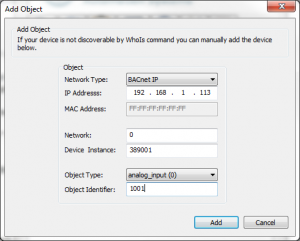
- The newly added device or object will appear in the CAS BACnet Explorer tree. At this stage, the device has been defined but not yet fully queried.
- Right-click the device in the tree and select Discover. The Discovery dialog will open with Discover device’s properties and Discover objects selected.
- Click Send to begin direct communication with the device.
Understanding Discovery Results and Errors
If CAS BACnet Explorer successfully connects to the device, the device profile will be populated with its available objects and properties. This confirms that direct BACnet communication across the subnet is working as expected.
If an error message such as “Err #1: request timed out” appears, CAS BACnet Explorer was unable to establish a direct connection to the BACnet device. This may indicate incorrect addressing information, routing issues, firewall restrictions, or that the device is not reachable on the network.
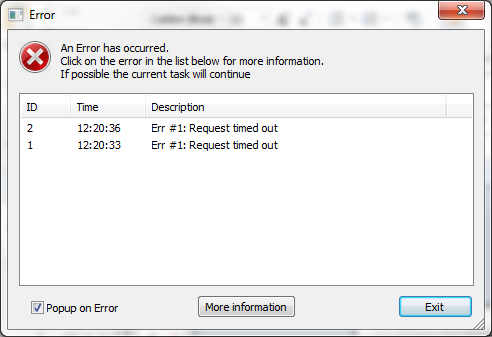
Verifying network connectivity and confirming device configuration details is recommended before retrying the discovery process.
FAQ
Can CAS BACnet Explorer communicate across subnets?
Yes. CAS BACnet Explorer can communicate across subnets using direct BACnet messages when device information is entered manually.
Why can’t the device be discovered automatically?
Automatic discovery relies on BACnet broadcast messages, which typically do not cross subnet boundaries.
What information is required to add a device manually?
Network type, IP or MAC address, network number, device instance, object type, and object identifier.