Graphene Based Supercapacitors are Getting Upgraded
The global push for faster charging and higher energy density in energy storage has led to significant breakthroughs in supercapacitor technology. Researchers at the Indian Institute of Technology (IIT), Kharagpur, have developed a revolutionary nanocomposite material that could redefine the efficiency of next-generation supercapacitors.
By combining Graphene, silver, and polypyrrole, this new material offers a high-surface-area solution for electrical double-layer capacitance and pseudo-capacitance, bridging the gap between traditional batteries and standard capacitors.
The Nanocomposite Breakthrough: Graphene, Silver, and Pyrrole
The core of this "upgrade" is a sophisticated nanomaterial architecture. The structure consists of a high-quality Graphene sheet serving as a substrate, upon which silver nanoparticles are uniformly embedded.
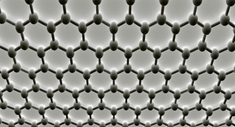
Key Performance Specifications:
- Nanoparticle Size: The embedded silver particles measure approximately 15-20 nanometers in width, providing an immense surface area for charge transfer.
- Specific Capacitance: The material demonstrated a high capacitance of 472 Farad per gram at a current density of 0.5 Amperes per gram.
- Durability: Crucially for industrial applications, the material retained 95% of its initial capacitance even after 1,000 consecutive charge-discharge cycles.
Flexible Graphene Fabric and Smart Textiles
The potential for Graphene supercapacitors extends beyond stationary storage. Researchers from The University of Manchester recently demonstrated the ability to print flexible Graphene-based supercapacitors directly onto textiles using standard screen-printing techniques.
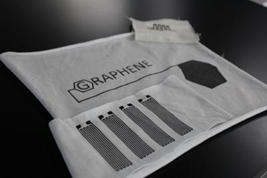
Fig: Graphene fabric utilized for flexible energy storage.
This advancement enables the creation of smart clothing with built-in energy storage, capable of powering biometric sensors and communication devices without the need for rigid, bulky battery packs. The integration of the silver/pyrrole nanocomposite could further increase the run-time of these wearable devices.
FAQ – Graphene Supercapacitors
1) What makes Graphene better than carbon for supercapacitors?
Graphene’s single-atom thickness provides a significantly higher theoretical surface area and electrical conductivity compared to activated carbon, allowing for more efficient charge storage and faster discharge rates.
2) How do silver nanoparticles improve performance?
Silver is an excellent conductor; its inclusion in the Graphene matrix reduces internal resistance and enhances the pseudo-capacitive behavior of the material, leading to higher overall Farad ratings.
3) Can these supercapacitors replace Lithium-Ion batteries?
While supercapacitors charge faster and last for more cycles, they currently have lower energy density than Li-ion batteries. They are best used as complementary storage for high-power bursts or in devices requiring rapid recharges.


