Modbus Protocol Specification
Modbus Integration Solutions
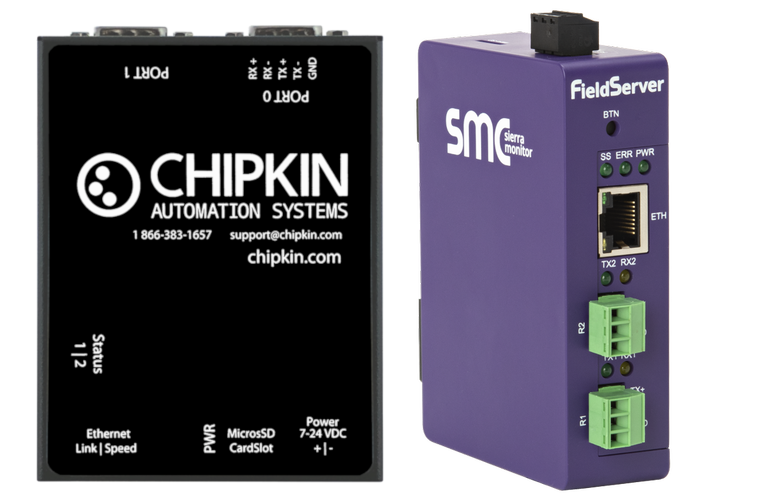
Chipkin has Modbus solutions for almost every situation. We are experts in Modbus RTU/TCP communication and carry a wide variety of Modbus products:
Modbus is an open communications protocol based on a master/slave or client/server architecture, originally developed by Modicon for use with programmable logic controllers (PLCs). It is widely used in Industrial Automation Systems (IAS) and Building Management Systems (BMS) to exchange data between control devices such as PLCs, controllers, sensors, and supervisory software.
One of the main reasons Modbus remains widely adopted is that the protocol specification is openly published and freely available. This allows manufacturers, integrators, and software developers to implement Modbus without licensing restrictions. Modbus is also relatively simple to implement and has proven reliable in long-term field deployments.
Modbus Communication Model and Variants
Modbus operates using a request/response communication model. A Modbus client (or master) sends a request message, and a Modbus server (or slave) responds with data or confirmation. This behavior is consistent across all Modbus variants, regardless of whether communication is serial or Ethernet-based.
The original Modbus implementations are serial-based and remain common today. The two primary serial variants are Modbus RTU and Modbus ASCII, both of which operate over RS232 or RS485 physical layers. These variants differ primarily in how data is encoded and transmitted.
- Modbus RTU uses a compact binary data format, resulting in shorter messages and more efficient use of bandwidth.
- Modbus ASCII uses human-readable characters, making messages easier to inspect but more verbose than RTU.
Modbus is also implemented over Ethernet using Modbus TCP. Modbus TCP encapsulates Modbus messages within TCP/IP, allowing communication over standard Ethernet networks and infrastructure.
Official Modbus Protocol Specifications
The Modbus protocol is formally defined by a set of official specification documents. These documents describe message structure, function codes, data models, and implementation requirements for different transport layers.
The following Modbus specifications are commonly referenced by developers and integrators:
- Modbus Application Protocol Specification V1.1a
- Modbus Messaging Implementation Guide V1.0a
- Modbus Serial Line Implementation Guide V1.0
These documents are the authoritative reference for how Modbus messages are constructed and interpreted and should be consulted when implementing or troubleshooting Modbus communications.
Modbus Tools, Drivers, and Practical References
Modbus tools are commonly used to test, analyze, and troubleshoot communication between Modbus devices. These utilities allow engineers to view raw messages and verify correct protocol behavior.
- CAS Modbus RTU Parser – Utility for analyzing Modbus RTU messages.
- CAS Modbus TCP Parser – Utility for analyzing Modbus TCP message streams.
FieldServer driver factsheets provide protocol-specific implementation details for Modbus over different transport types:
FAQ
What is Modbus?
Modbus is an open, request/response communication protocol used in industrial and building automation systems.
What are the main Modbus variants?
The main variants are Modbus RTU and Modbus ASCII (serial-based) and Modbus TCP (Ethernet-based).
Where can I find the official Modbus specification?
The official Modbus specifications are published by Modbus.org and linked above.