Inventors Killed By Their Own Inventions
Throughout history, technological progress has often advanced through experimentation carried out under conditions that would be considered unsafe by modern standards. In some cases, inventors have suffered fatal consequences while testing or demonstrating their own creations. These incidents provide historical context for the development of modern engineering practices, safety standards, and validation methodologies.
One of the most frequently cited examples is Franz Reichelt, whose work in early aviation safety illustrates both the ambition of early inventors and the risks associated with unproven designs.
Franz Reichelt and Early Aviation Safety
Franz Reichelt (d. 1912), sometimes referred to as the “Flying Tailor,” was an Austrian-born inventor living in France during the early years of powered flight. At the time, aircraft were rapidly evolving, but standardized safety equipment for pilots—such as reliable parachutes—was not yet widely adopted.
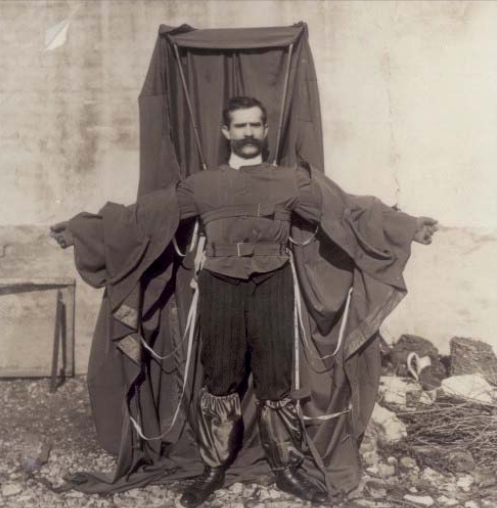
Reichelt focused his efforts on designing a wearable parachute suit that could be integrated directly into a pilot’s clothing. His goal was to eliminate the need for separate parachute packs by creating a garment that would deploy automatically during a fall. The design consisted of a heavy, coat-like structure with folded fabric panels intended to act as a parachute canopy.
While the concept addressed a real safety concern, the design had not been validated through sufficient staged testing. Early trials using dummies had produced mixed results, and the deployment behavior of the suit remained unpredictable.
The Eiffel Tower Demonstration
On February 4, 1912, Reichelt conducted a public test of his parachute suit from the Eiffel Tower. Authorities granted permission for the demonstration under the assumption that a mannequin would be used. Contrary to expectations, Reichelt chose to perform the jump himself.
Upon jumping, the parachute suit failed to deploy correctly and did not generate sufficient drag to slow the descent. Reichelt died on impact. The event was filmed, making it one of the earliest recorded fatal accidents involving experimental personal flight equipment.
The incident underscored the limitations of intuitive design without empirical validation and marked a turning point in public awareness of aviation safety risks.
Engineering Lessons and Safety Implications
Reichelt’s death highlights several principles that are now fundamental to engineering and system design. Modern safety-critical systems are developed using incremental testing, simulation, peer review, and controlled certification processes. These practices are designed to identify failure modes before human exposure occurs.
In fields such as aviation, industrial automation, and life safety systems, formal risk assessments and validation stages are now mandatory. Designs are typically evaluated under worst-case conditions using models, test rigs, and redundant safety mechanisms rather than direct human trials.
Historical cases like this provide context for why modern standards exist and why deviations from established testing methodologies are treated seriously in regulated industries.
Additional Historical Examples
Franz Reichelt is one of several inventors whose deaths are historically linked to their own experimental devices. Other cases span fields such as transportation, chemistry, and mechanical engineering, often occurring during periods when formal safety frameworks were still developing.
A broader historical list of similar incidents is available for reference at: https://en.wikipedia.org/wiki/List_of_inventors_killed_by_their_own_inventions .
These accounts are best understood as part of the evolution of engineering discipline rather than as isolated anomalies.