NEC 2017 – Meeting Room Outlet Requirements
In the 2017 edition of the National Electrical Code (NEC), meeting rooms in other-than-dwelling occupancies gained a dedicated receptacle-outlet requirement intended to reduce safety hazards associated with extension cords and temporary power taps spread across walking paths.
This requirement originally appeared as NEC 2017 Section 210.71, and it applies to meeting rooms not more than 93 m² (1000 ft²). The code language requires outlets for nonlocking-type, 125-volt, 15- or 20-ampere receptacles and points readers to additional placement rules within the same section.
Where a room includes movable partitions, the NEC language directs that the room size be determined with the partition positioned to create the smallest meeting room, ensuring the requirements are still met when a large space is subdivided.
Why Meeting Room Receptacle Requirements Exist
Meeting rooms routinely host portable equipment such as laptops, chargers, projectors, and conference-room AV gear. Before NEC 2017, a common “workaround” in many facilities was running cords across floor space to reach tables and seating. That approach can create trip hazards, damaged cords, and unsafe temporary wiring practices.
The NEC’s meeting room provisions aim to ensure power is available where occupants actually use equipment—especially in the middle of the room where tables are often located—so that cords do not need to be routed across walking surfaces.
Practically speaking, designers and installers typically address this by combining wall receptacle planning with strategically located floor power (or floor outlets that serve receptacles in furniture), depending on the room layout and use case.
NEC 2017 (210.71) Key Technical Points
NEC 2017 Section 210.71 established baseline requirements for meeting rooms 1000 ft² (93 m²) or less. The section includes both a general requirement and additional rules used to determine minimum receptacle outlet provisions.
A commonly cited portion of the 2017 meeting-room language is the floor receptacle concept: for meeting rooms that are at least 12 ft wide and at least 215 ft² in area, at least one receptacle outlet is required in the floor, positioned at least 6 ft from any fixed wall, with scaling based on room area.
Updates Since NEC 2017: Section 210.71 Moved to 210.65
Yes—there have been updates since NEC 2017, primarily in the form of renumbering and clarifications. In the 2020 NEC, the meeting room receptacle requirements moved from 210.71 to 210.65, and the wording was refined to improve applicability and flexibility.
One important clarification in 2020 is that the floor-outlet requirement applies to a meeting room with any floor dimension that is 12 ft (3.7 m) or greater in any direction (helpful for non-rectangular rooms). The 2020 language also permits either a floor receptacle outlet or a floor outlet to serve receptacle(s), which supports solutions such as hardwired furniture power served from a floor outlet.
Later code-cycle materials (including 2023 training/highlight references) continue to point readers to NEC 210.65(B) for determining minimum receptacle outlet counts and floor outlet provisions for qualifying meeting rooms, indicating the rule set remains active in newer editions (subject to local adoption by the Authority Having Jurisdiction).
Common Installation Approaches (Floor Boxes and Poke-Throughs)
Code-compliant design usually starts with understanding where occupants will sit and where tables will be placed. If the room layout drives power needs away from walls, designers frequently use floor-based solutions to reduce reliance on extension cords.
Common approaches include:
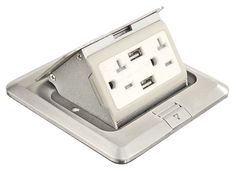
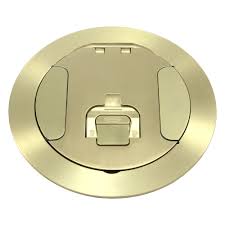
- Floor boxes installed beneath conference tables or in open floor areas, positioned to satisfy the “distance from fixed walls” intent
- Poke-through devices used to bring power through floors in retrofit scenarios where slab access is limited
- Floor outlets serving furniture receptacles (where permitted by the applicable NEC edition and local interpretation)
Always validate the final layout against your locally adopted NEC edition and the AHJ’s expectations, especially for renovations where furniture plans, partitions, and room classifications may be disputed.
FAQ: NEC Meeting Room Receptacle Requirements
Did NEC 2017 create a new meeting room receptacle requirement?
Yes. NEC 2017 introduced meeting room receptacle requirements in Section 210.71 for meeting rooms (in other than
dwelling units) not more than 1000 ft², including provisions that drive receptacle availability beyond just walls.
Has the NEC changed this rule since 2017?
The most notable change is structural and clarifying: in the 2020 NEC, the meeting room rules moved from 210.71 to
210.65 and clarified applicability to rooms with any 12 ft dimension in any direction, plus added flexibility for a
floor outlet that serves receptacles.
Does this apply everywhere today?
NEC adoption varies by jurisdiction. The enforceable requirement is the edition adopted by your local Authority
Having Jurisdiction (AHJ), not necessarily the latest NEC edition.
Why do floor boxes and poke-throughs show up as solutions?
Because the safety objective is to reduce extension cords across floor space. Floor-based power solutions are often
the most direct way to provide power near conference tables and seating layouts.